How to Ship Artwork Safely
What this helps you do
Plan packing, transit, documentation, and receipt before dispatch.
Packing and shipping artwork is where a lot of sales quietly go wrong. A broken piece, a cracked frame, a lost shipment: all recoverable, but all expensive to the artist's time, money, and reputation. Here's how to keep that from happening.

Before anything else: document the work
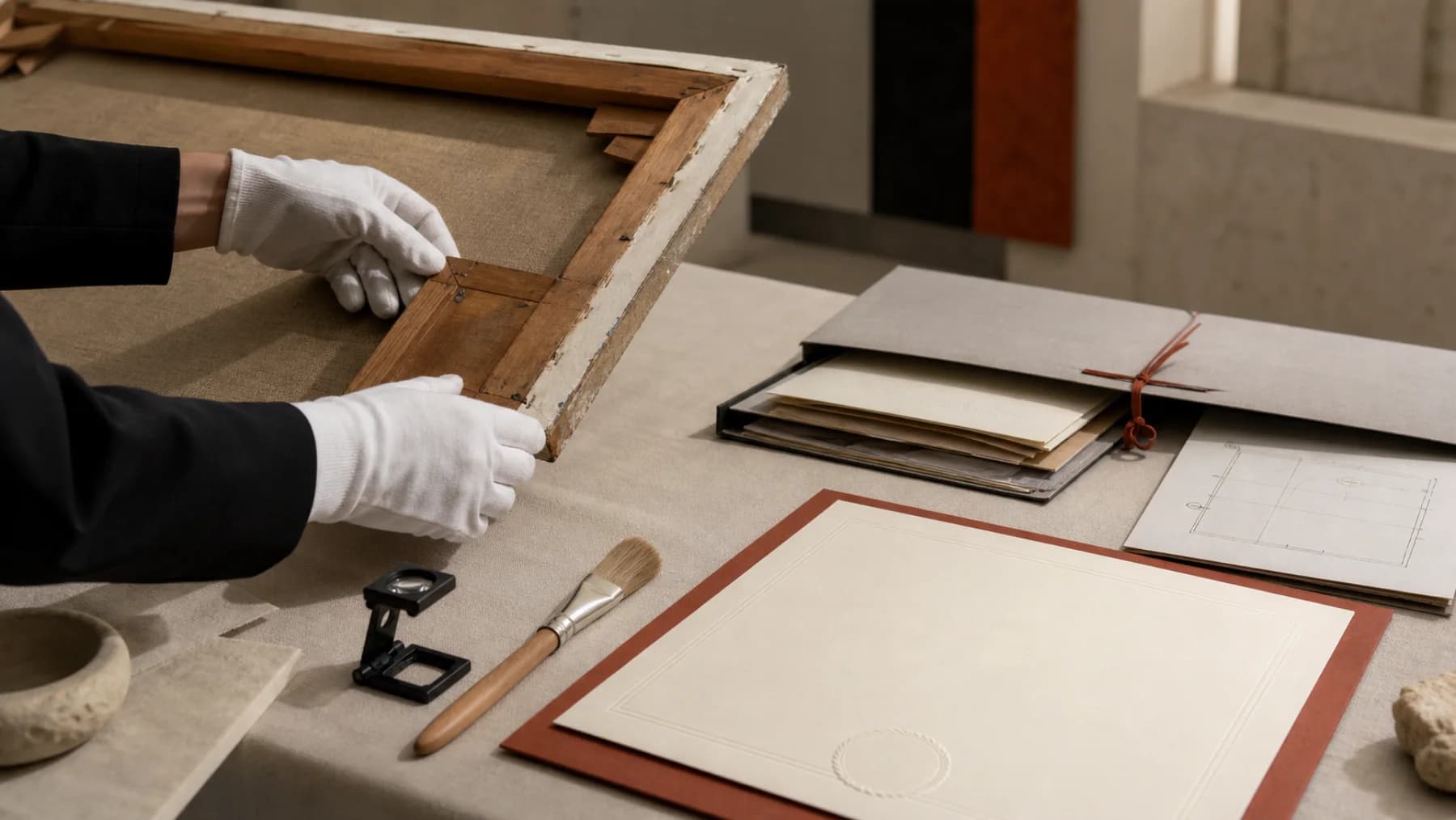
Before a piece leaves the studio, photograph it from multiple angles, including the back, the frame, the edges, and any existing marks or repairs. These images are what you'll need if you have to file an insurance claim, demonstrate prior condition, or prove the work left undamaged.
Keep condition photos attached to the artwork record along with the shipping date and carrier. These records can support a carrier or insurer claim, but the required evidence and claim process vary by provider.
Packing by medium
Works on paper
Flat pack between two rigid sheets (acid-free backing board inside, corrugated cardboard outside). Glassine or interleaving paper directly against the surface. For anything valuable, add a layer of foam board, then box. Mark clearly as "Do Not Bend."
Unframed canvases
Face-to-face pack two canvases with glassine between, cardboard corners, wrapped in bubble wrap, in a snug box. Never tape directly to the canvas or stretcher. For single canvases, use a picture box with internal edge guards.
Framed work
Ask the framer, carrier, or specialist shipper for packing guidance that suits the glazing, frame, value, and journey. Corner protection and a rigid outer package are common parts of a suitable system. Fragile or high-value work may need a crate.
Sculpture
Custom crate with foam inserts cut to the exact profile of the work. Immobilize the piece completely. It should not be able to shift inside the crate. For heavy work, use a forkliftable base.
Materials that are worth paying for
- Acid-free tissue and glassine
- Archival foam board (Gatorboard, not craft foam)
- Cardboard corner protectors
- Double-wall cardboard boxes, not single-wall
- Fragile tape and "This Way Up" arrows
- For framed work: corrugated cardboard or custom crates
The right materials and package design depend on the medium, size, route, and carrier. Ask your carrier or specialist shipper what packaging their claims process requires before you buy supplies.
Carriers: what to use when
Choose a carrier by the work's dimensions, fragility, declared value, route, and the carrier's published exclusions:
- Small, robust works: A tracked parcel service may be appropriate if its size, material, and value limits cover the work.
- Fragile or framed works: Compare each carrier's packaging, declared-value, and claims terms before booking. Signed delivery may be useful where offered.
- High-value or international work: A specialist fine-art shipper may be appropriate, particularly where a crate, customs support, or controlled handling is needed.
- Oversized or unusually fragile work: Get a written packing and transport plan from a specialist before the work travels.
Insurance
Carrier liability, declared value, and insurance are different products with different exclusions. Read the carrier's current terms and speak with an insurer or broker before shipping work you could not comfortably replace.
Keep documentation for every shipment: a signed condition report before packing, a packing checklist, tracking numbers, and dated photos of the packed parcel. If you ever need to file a claim, those records can be important to the claim. You can read more about art documentation for insurance for a deeper guide.
International shipping and customs
Crossing borders adds paperwork. A commercial invoice, accurate HS code, declared value, and supporting documents may all be required. Classification and import requirements vary by country and by the exact work. Use the destination customs authority or a customs broker to confirm the correct code and paperwork. Do not make an inaccurate declaration to reduce charges.
For temporary cross-border loans or exhibition movements, an ATA Carnet or another temporary-admission process may be appropriate. Check eligibility with the customs authorities for every country in the route before the work travels.
Who pays for what
Decide this before it becomes a problem. Typical arrangements:
- Direct sale: buyer usually pays shipping, quoted in advance and added to the invoice.
- Gallery consignment: negotiated. Outbound often the artist, inbound often the gallery. Put it in the consignment agreement.
- Returns from consignment: specify in writing who is responsible and under what deadline.
Unwritten assumptions about shipping are one of the easiest ways for artist-gallery relationships to sour. Put it on paper.
After it ships
Send tracking to the recipient immediately. Update the artwork record with the shipment date, carrier, and destination. When it arrives, ask the recipient to inspect and acknowledge condition on delivery.
Keep packaging and documentation for at least the carrier's stated inspection and claims period. If something is wrong, follow the carrier's instructions promptly and avoid discarding evidence.
Sources and further reading
Log every shipment against the artwork
Artwork Codex lets you record current location, consignment status, and sale details next to each piece, so you always know where a work is and when it shipped.
Paid checkout requires a card. Cancel anytime. The Free plan remains available without a card.
Free plan covers consignment and location tracking for up to 5 artworks.