How to Photograph Artwork for Your Website, Portfolio, and Prints
What this helps you do
Make faithful, reusable images of finished work.
Good artwork photography does not need to feel mysterious. Most artists do not need a commercial studio. They need a repeatable setup that produces accurate, consistent images every time a new piece is finished.
Why clean documentation photos matter
Your artwork image has to do a lot of work. It needs to represent the piece on your website, in calls for entry, in catalogs, in viewing rooms, and often in the first conversation with a collector. If the image is crooked, dim, reflective, or poorly cropped, the work itself looks less considered, even when it is not.
Documentation photography is not about making the work look dramatic. It is about making the image trustworthy. Accuracy beats flair almost every time.
The simplest setup that gets strong results
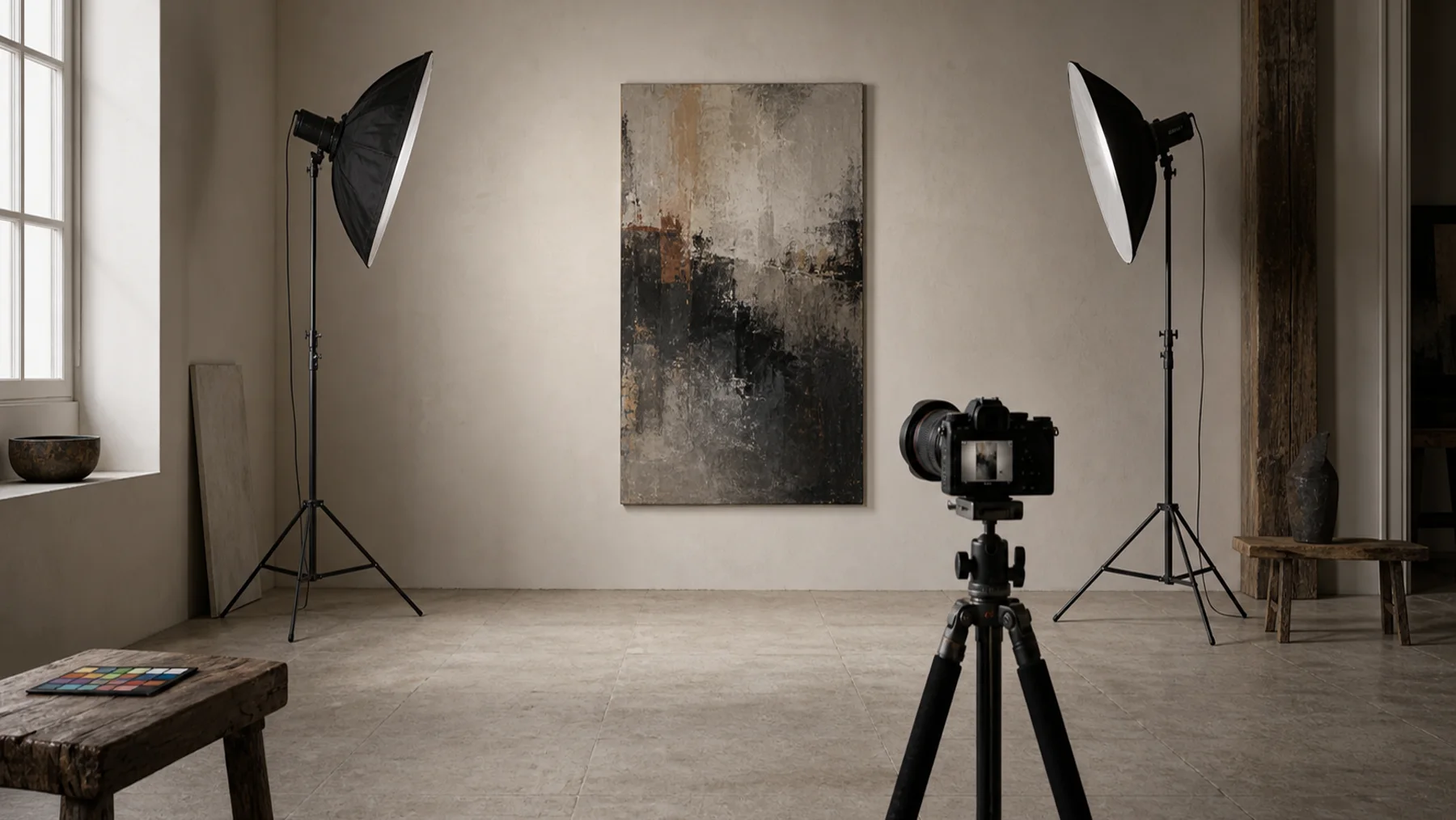
Most artists can get very good results with a phone or camera, a tripod, a neutral wall, and even lighting. If you can keep the work flat, the camera level, and the light consistent, you are already most of the way there.
- Use a plain white or neutral background.
- Mount the work securely so it sits flat.
- Position the lens so it is centered and parallel to the artwork.
- Use a tripod or stable support so the frame stays square from shot to shot.
- Shoot in bright, indirect light or with two balanced lights at matching angles.
Lighting mistakes that ruin artwork photos
Lighting is the difference between a clean record and an image you never want to use again. Direct flash is usually the main culprit. It creates glare, flattening, and hot spots, especially on varnished or glazed work.
If you are using natural light, choose soft light rather than harsh sun. If you are using artificial light, keep both lights balanced and placed symmetrically. Uneven lighting is easy to miss in the moment and annoying to fix later.
How to keep the image square and accurate
Perspective distortion makes rectangular work look trapezoidal. That is one of the fastest ways to make documentation look amateurish. The solution is simple but non-negotiable: the camera sensor must be parallel to the artwork.
Stand back and zoom slightly if needed, rather than placing the camera too close with a wide lens. That reduces distortion and gives you a cleaner crop. Take a second to check that all four edges feel even before you move on.
What to capture beyond the main front image
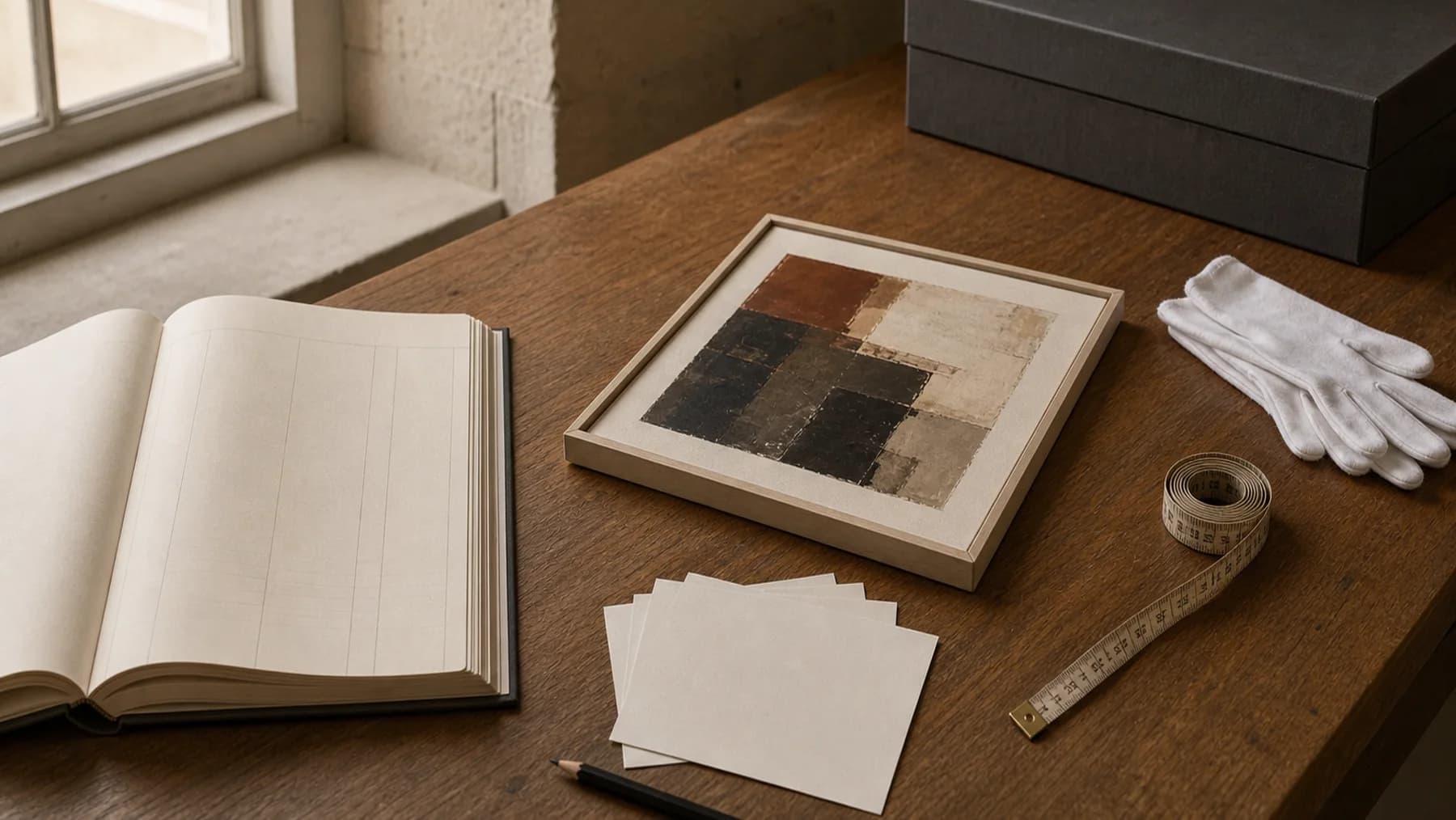
One front-facing image is essential, but it is rarely enough for a complete record. Depending on the work, you may also want detail shots, edge shots, framed installation shots, back-of-work images, and signature photos.
These are not just marketing extras. They help with provenance, insurance, certificates, condition tracking, and future printing. If you ever need to answer a question about a specific piece years later, having more than one image can save a great deal of time.
File naming and record keeping
Image organization matters almost as much as image quality. A folder of files namedIMG_4387.jpgandfinal_final_2.jpgis difficult to maintain.
A better format is something like2026-014_blue-window_front.jpgand2026-014_blue-window_detail-01.jpg. Tie filenames to your inventory codes and your records become much easier to search and reuse. That also makes it easier to move the same images into your portfolio, PDFs, and sales documents later if you are using an art inventory system like Artwork Codex.
Editing should correct, not stylize
Basic editing is usually necessary. Crop the image cleanly, straighten it, adjust white balance if needed, and make sure the colors are as close to the artwork as possible. What you want to avoid is editing that makes the piece look more saturated, dramatic, or contrast-heavy than it really is.
Collectors, curators, and print partners want faithful images. If the artwork arrives and feels noticeably different from the image, trust is lost very quickly.
Store polished artwork images in one place
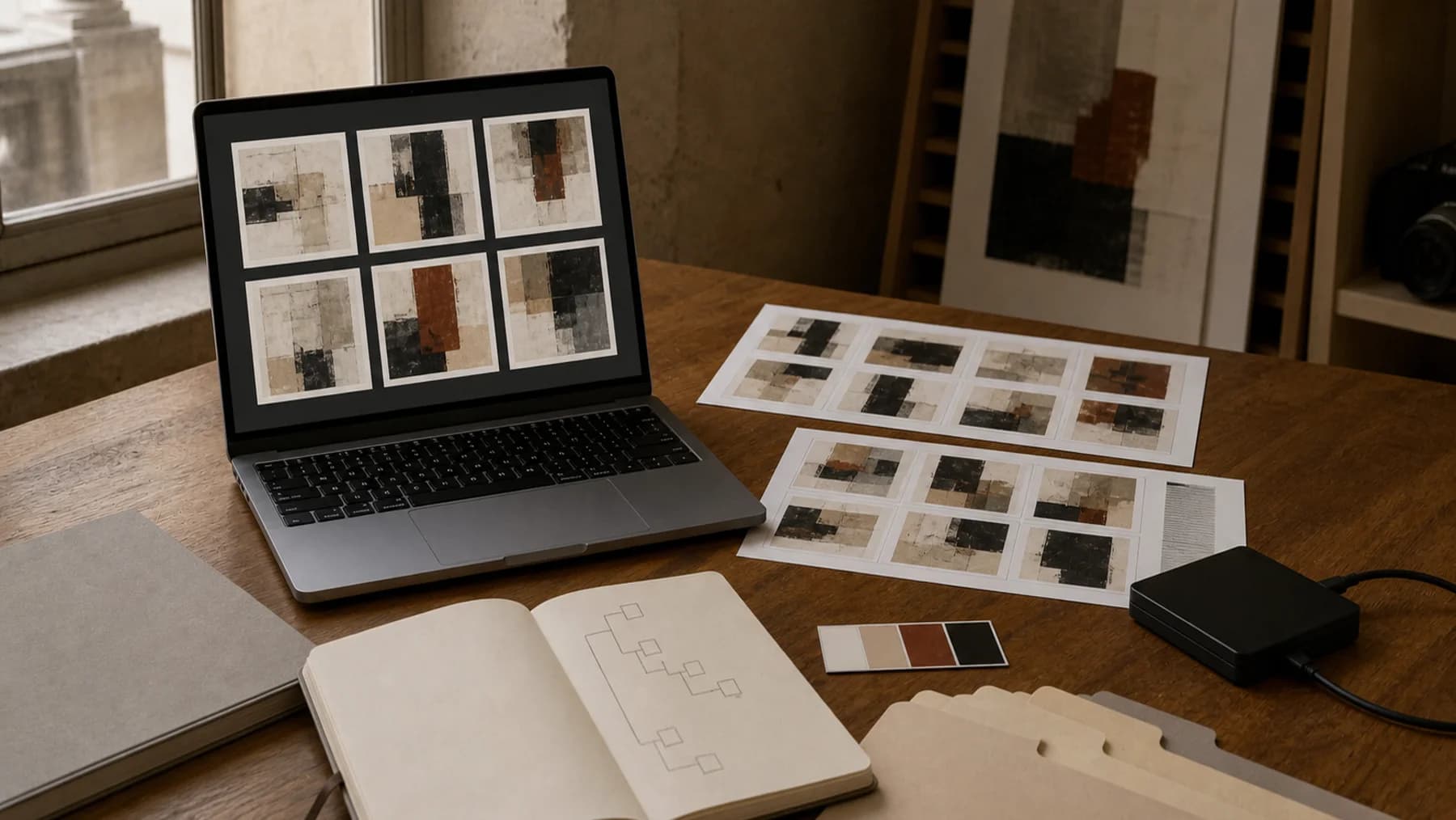
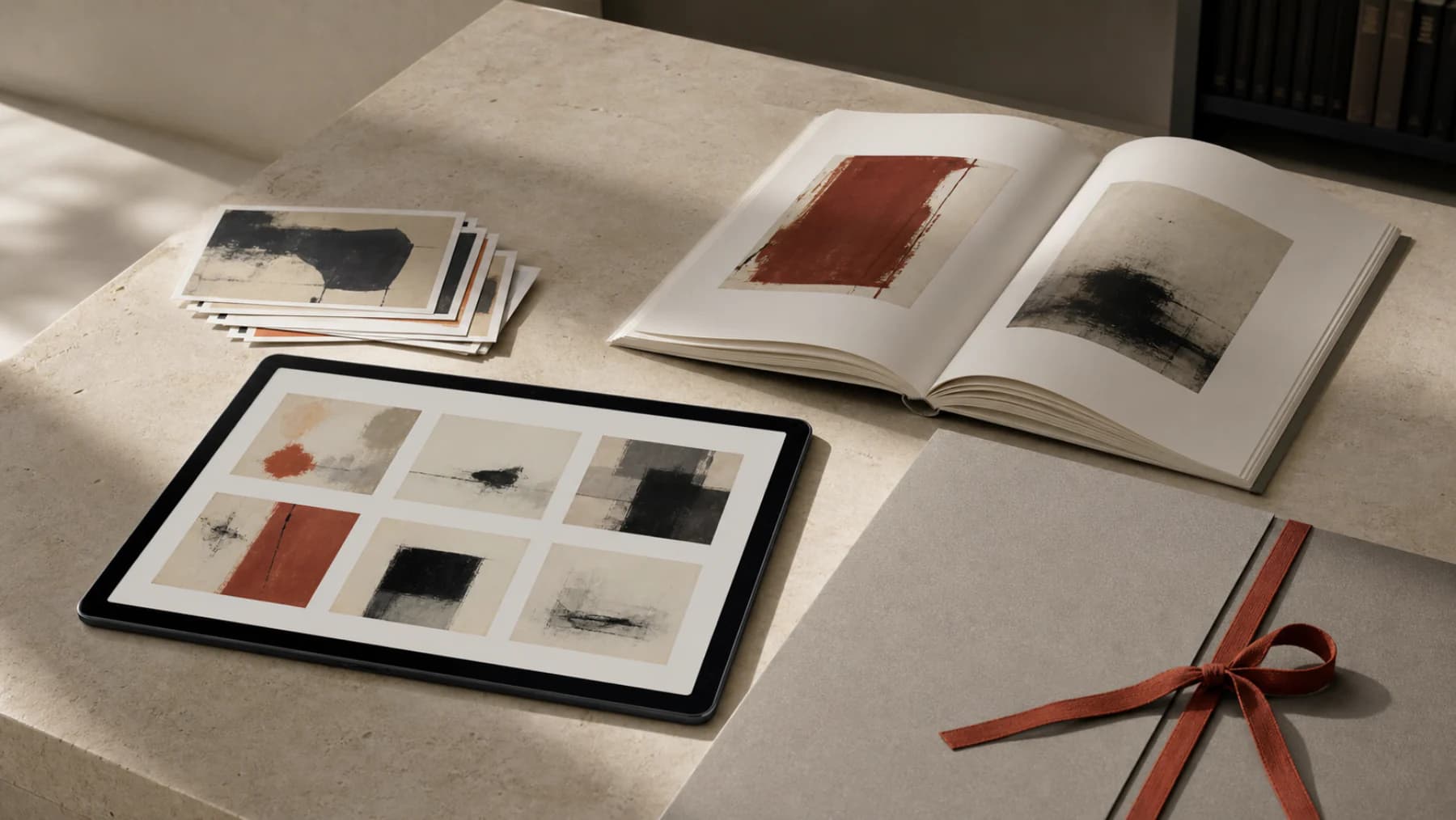
Artwork Codex lets you attach multiple high-resolution images to each work, reorder them, crop them, and use them in portfolios, certificates, and PDF catalogs.
Paid checkout requires a card. Cancel anytime. The Free plan remains available without a card.
Free plan available. Great records start with good images.